Braised Beef Belly in Hot Pot
This post may contain affiliate links. Please read my disclosure policy for details. As an Amazon Associate, I earn from qualifying purchases.
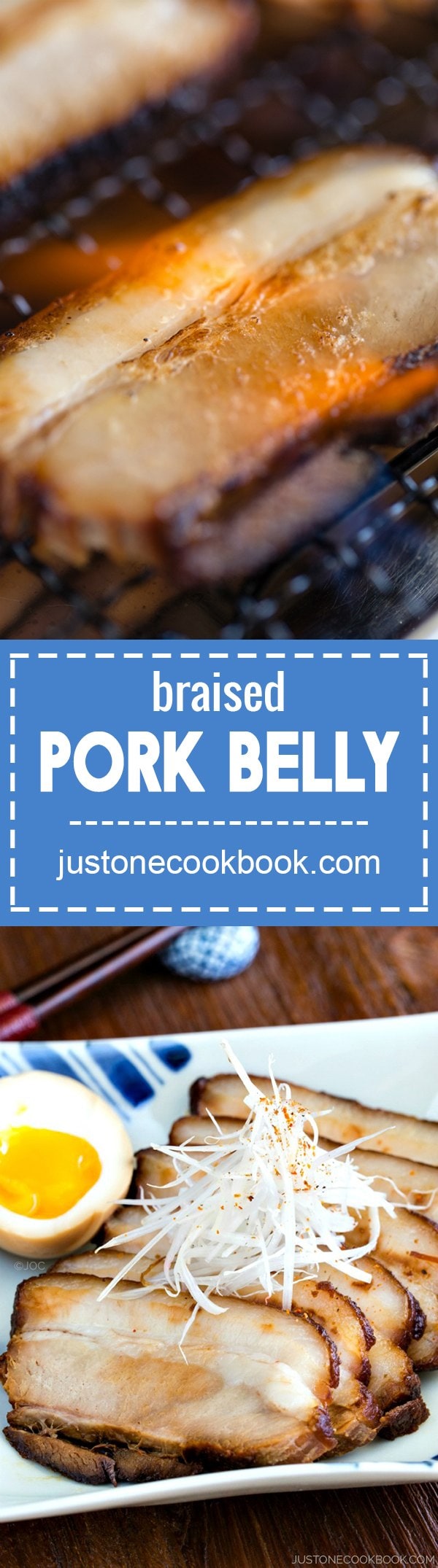
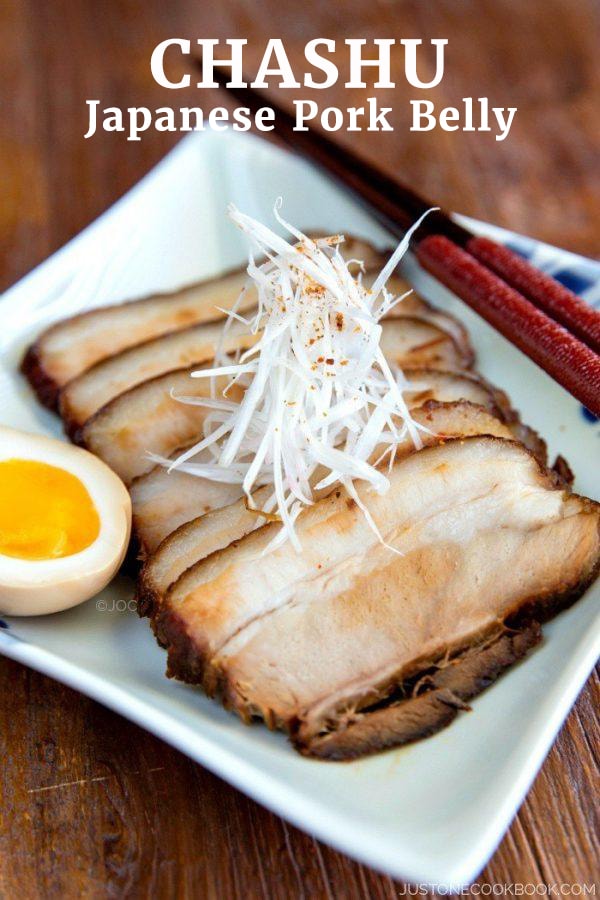
Make this easy, melt-in-your-mouth Chashu pork belly recipe at home! Braised in a sweet and savory sauce, these tender slices of meat can now top your next bowl of ramen! It's the most fulfilling reward for any pork belly lover out there!
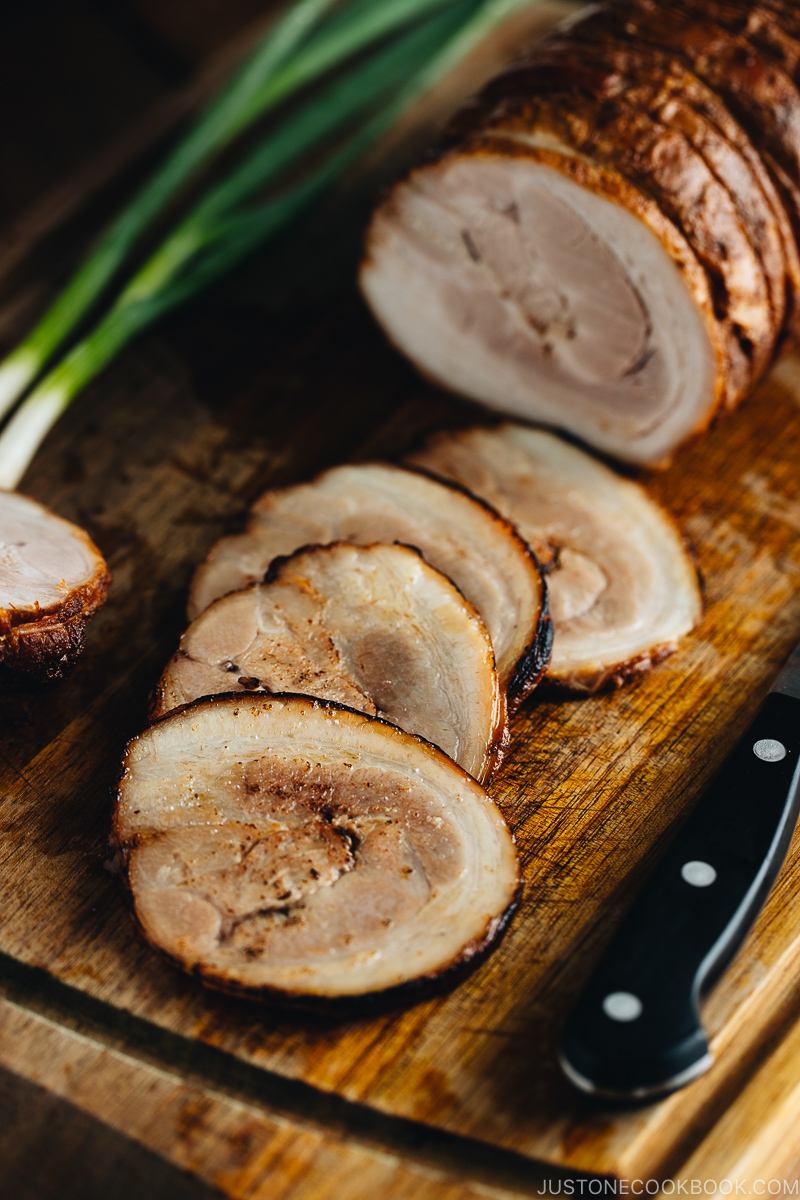
What is your favorite ramen topping? For me, it is the perfectly cooked soft-boiled marinated Ramen Egg (Ajitsuke Tamago). But for most people I know, including Mr. JOC, it is the melt-in-your-mouth juicy, tender, and flavorful slices of braised pork belly known as Chashu (チャーシュー).
What is Chashu?
Japanese have adapted the famous Chinese barbecued pork called Char Siu (叉燒) as chāshū (チャーシュー). Unlike the Chinese version which requires roasting over high heat, we prepare the meat by rolling it into a log and then braising it over low heat in a sauce seasoned with soy sauce, sake, and sugar.
In Japanese, Chashu is sometimes called "Nibuta" (煮豚), literally means simmered/braised pork, as opposed to "Yakibuta" (焼豚), which means barbecued pork. The Japanese enjoy Chashu as a topping for Ramen and other noodles, as well as Chashu over steamed rice called Chashu Don, like a rice bowl.
The Original Chinese Char Siu
Traditionally, Chinese char siu is marinated in soy sauce, honey, hoisin sauce, rice wine, five-spice powder, and red food coloring, and then roasted in a covered oven or barbecued over a fire. You have probably seen the slabs of barbecued pork hanging in Chinese deli shop windows.
Chinese Char Siu offers a good bite with marked, smoky grilled flavor, while Japanese chashu is appreciated for its succulent and fork-tender texture.
Watch How to Make Chashu
Make this easy, melt-in-your-mouth Chashu pork belly recipe at home! Braised in a sweet and savory sauce, you can now add the tender slice of meat as topping to your next bowl of ramen. It's the most fulfilling reward for any pork belly lover out there!
A Quick Rundown on How to Make Chashu Pork
First, we sear the pork belly over high heat to caramelize the surface of the meat. My go-to choice is a solid cast iron pan which I use for searing meats. With a cast iron, you can really turn up the heat and food comes in direct contact with an evenly heated surface. This step makes a great difference with the finished dish, enhancing it with complex layers of flavors.
After searing the meat, we then braise the meat in a soy sauce based seasoning on a simmering low heat for about 1-2 hours. The pork will slowly soak up all the flavors in the pot. Ginger and long green onion (in Japan it goes by a few names – Naganegi (長ねぎ), Shironegi (白ねぎ) or Tokyo negi (東京ねぎ)) help remove any unsavory smell and add more depth to the sauce.
When the sauce is reduced, transfer the meat to a bag or a container with a little bit of sauce, and let marinate in the refrigerator overnight to intensify the flavors.
Next day it's finally ready to serve. Slice the Chashu thinly but thick enough for the chopsticks to clasp on.
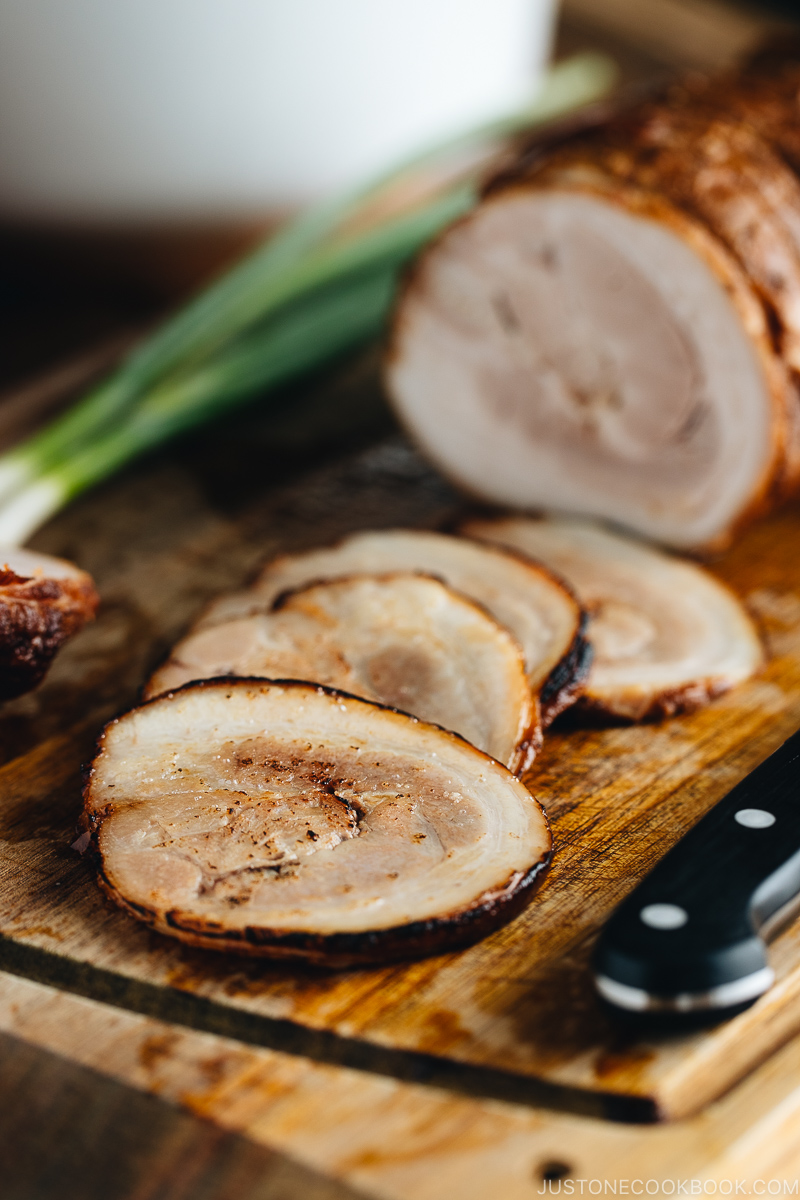
Chashu 2 Ways: Rolled (Log) vs. Non-Rolled (Block)
Chashu served on ramen is often rolled up although many ramen shops do serve slices of the Non-Rolled Chashu in Japan. Both ways are legitimate Chashu by the standard of ramen shops, but let's take a look at the two options.
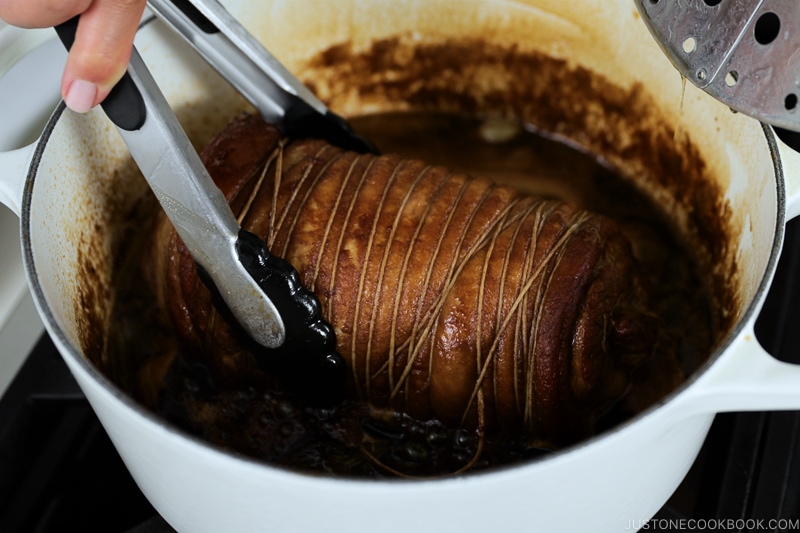
Rolled Chashu (Log)
The most common preparation for Chashu served on ramen is by rolling a big slab of pork belly into a log with butcher's twine. The main reason for that is to keep the pork moist. As the meat is not directly exposed to the sauce, meat does not get dry yet it still absorbs flavors.
When I roll the pork belly into a log shape, I usually increase the amount of cooking time because you will need more time to rotate the Chashu and to make sure it soaks up all the good flavors.
You may wonder why I don't increase the amount of seasoning so that Chashu will be completely submerged. Ramen shops make Chashu every day and they keep re-using the cooking sauce by combining with a new batch of seasoning. To a home cook, it is rather wasteful to make such a big batch of cooking sauce.
That's why you will need 2 hours to cook Rolled Chashu (as opposed to 1 hour for Non-rolled Chashu).
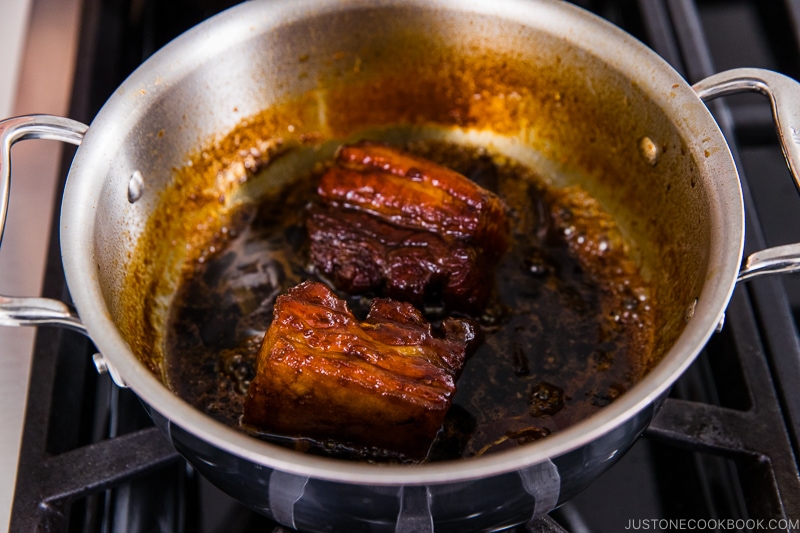
Non-Rolled Chashu (Block)
If you don't need a lot of Chashu, consider making Non-Rolled Chashu with smaller blocks of pork belly. The pork belly blocks I buy from the local Japanese supermarket come in small pieces (¾ to 1 lb). Since you don't need to roll them up into a log, you can start searing the pork belly right away.
The benefit of Non-Rolled Chashu is that braising time takes just 1 hour as the slab of pork belly is fairly flat and easily absorbs flavors. Make sure to use Otoshibuta (drop lid) so that the sauce will circulate nicely and there will not be too much evaporation during braising.
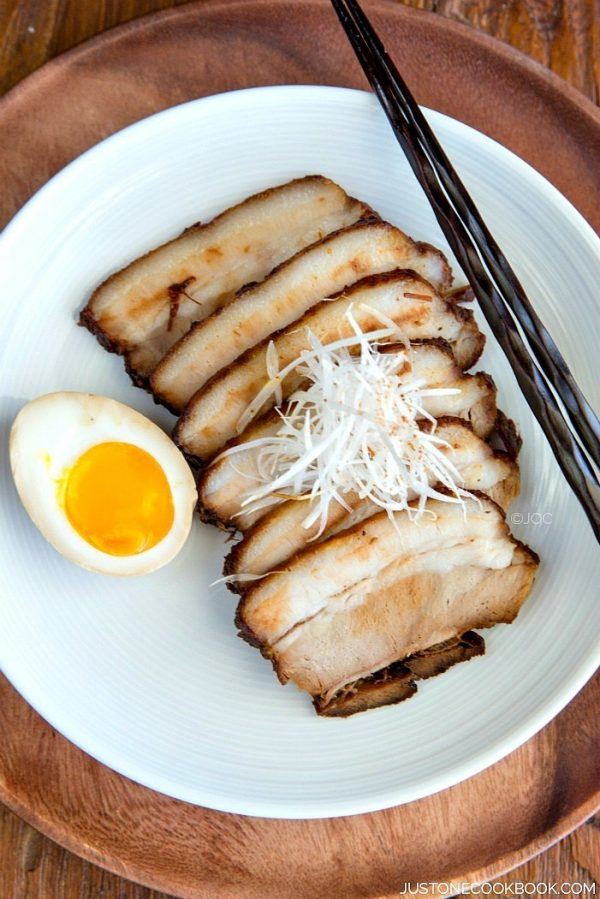
Chashu (Non-Rolled Chashu) served with Shiraga Negi topping and Ramen Egg.
How to Roll and Tie Chashu
Why do we roll Chashu?
- To maintain the shape after rendering fat.
- To keep the moisture in the meat (protected by outer layer/rind).
- To look pretty
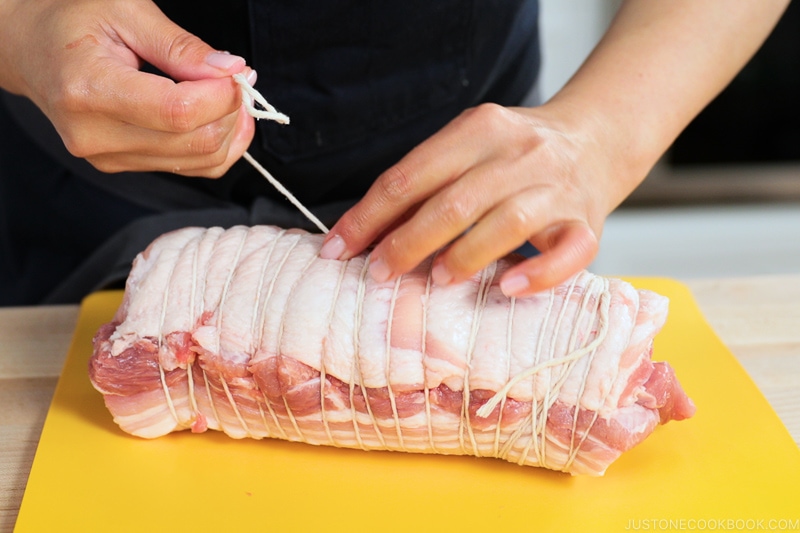
Learn how to roll and tie pork belly correctly
You can find the step-by-step pictures in the recipe below and the video above to go over the step, but here's the quick summary.
- Find out the right orientation for rolling. One or both ends should have the "bacon" like appearance, showing the varying layers of meat and fat.
- Roll up and find how much pork belly you need for a nice cooking Chashu. Cut off any extra meat and save it for other recipes.
- Once you roll up the pork belly into a log, wrap the meat with a butcher twine on one end and make a double knot.
- Wrap 2-3 more times on the same end (the starting point) to make sure it is secured.
- Then run the twine across the log to the far end and wrap 2-3 times tightly. Both ends are now secured.
- From this end, start wrapping tightly and work toward the starting point, keeping ⅓ inches (1 cm) between each wrap.
- Once you reach the starting point, run the twine under some wraps around the middle and then bring back to the starting point.
- Make a double knot with two ends of the butcher twine.
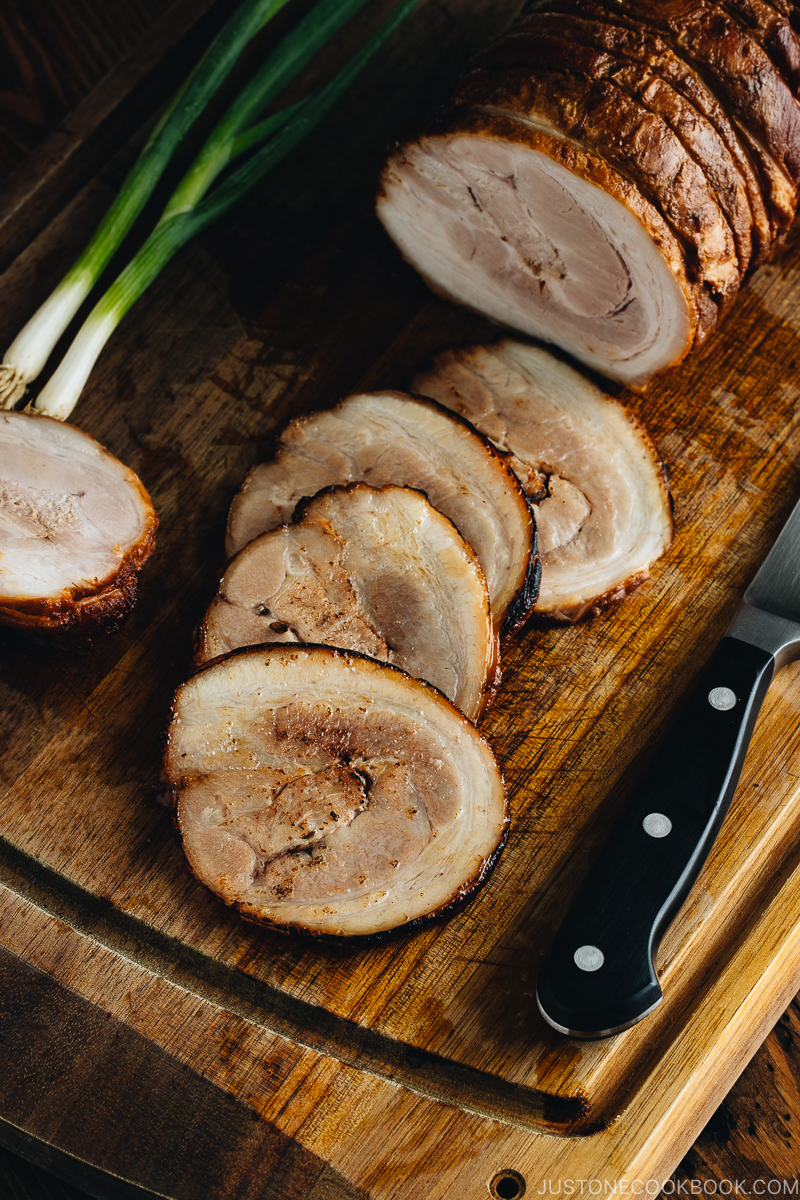
What Cut of Pork Do We Use for Chashu?
The ideal cut for chashu is pork belly, although you can use pork shoulder, and sometimes pork loin. Keep in mind that the last two choices don't get the melt-in-your-mouth texture as they do not have as much fat as pork belly.
In Japanese cooking, we usually use pork belly without a rind/skin (except for making certain Chinese or Okinawan recipes).
I always use pork belly for my Chashu recipe, but if you try pork shoulder, let me know. I personally would not recommend using pork loin for this recipe.
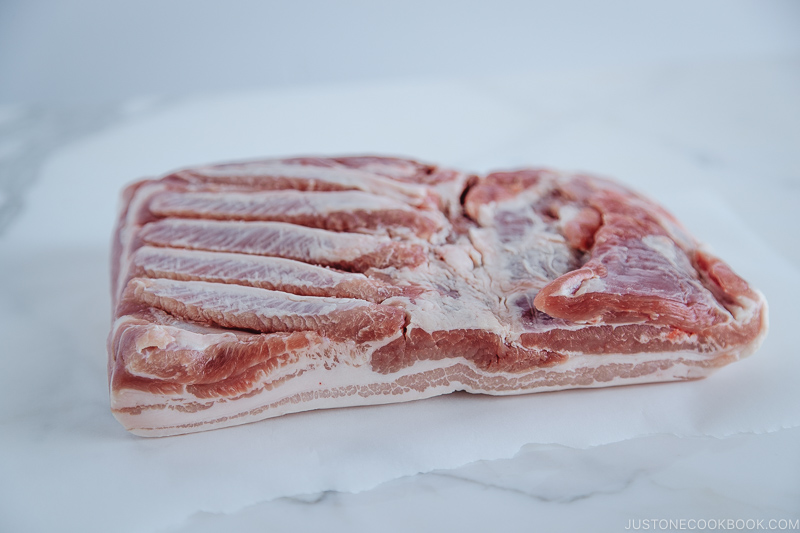
Where to Buy Pork Belly
You may not find pork belly sitting at the butcher window or sold pre-packaged, but most butchers should have them stored in the freezer. So don't be shy to ask the butcher at your local grocery stores or meat deli. Ready to make pork belly on the same day? Do call ahead and factor in the defrosting time as they usually come frozen.
The best place to shop for pork belly is Korean grocery stores. They sell different thicknesses and sizes of pork belly. I usually request the butcher to cut a specific size just for me.
You can also ask the butcher to remove the rind/skin (if there is any) or remove it yourself using a sharp knife.
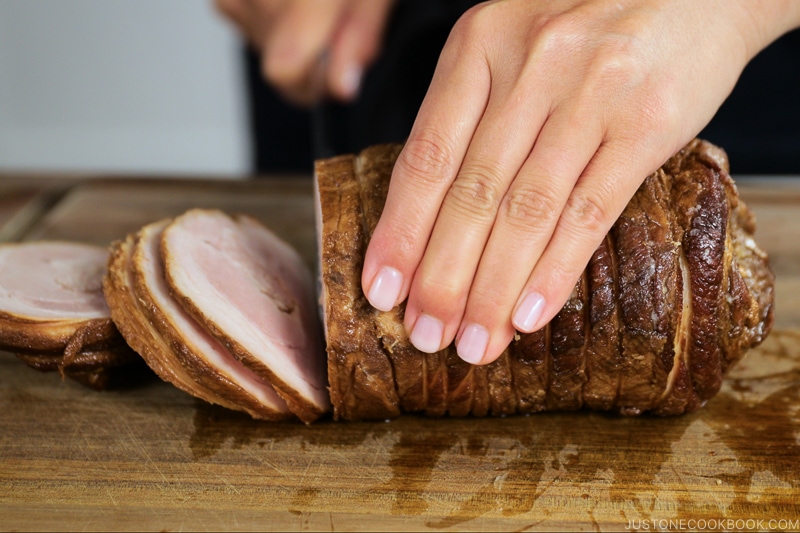
How to Cut Chashu
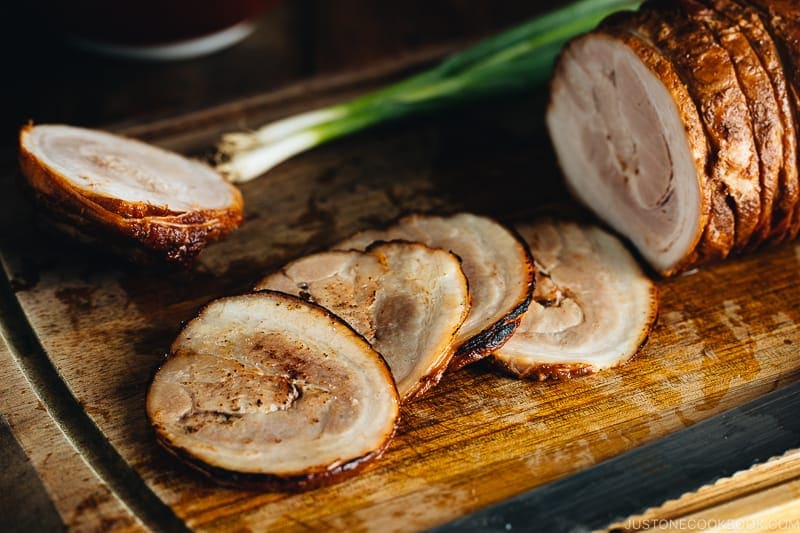
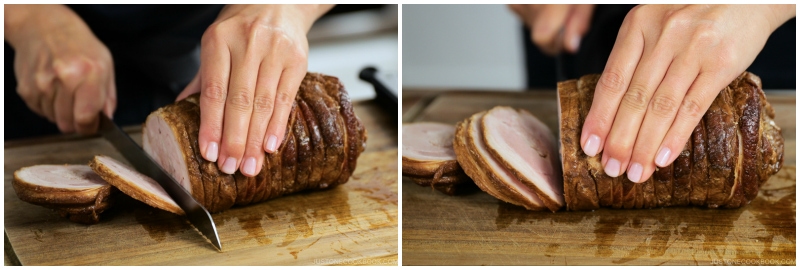
It's pretty easy to cut the Chashu into thin slices when it has been rested in the refrigerator overnight. A sharp bread knife would make your job relatively easier too.
I don't usually use up the entire Chashu in one meal, so I'd cut it into several thin slices for Ramen, and then cut the rest into 2 to 3 blocks and pack each piece in the Food Savor bag to store in the freezer. I'll show you below how I use Chashu besides Ramen.
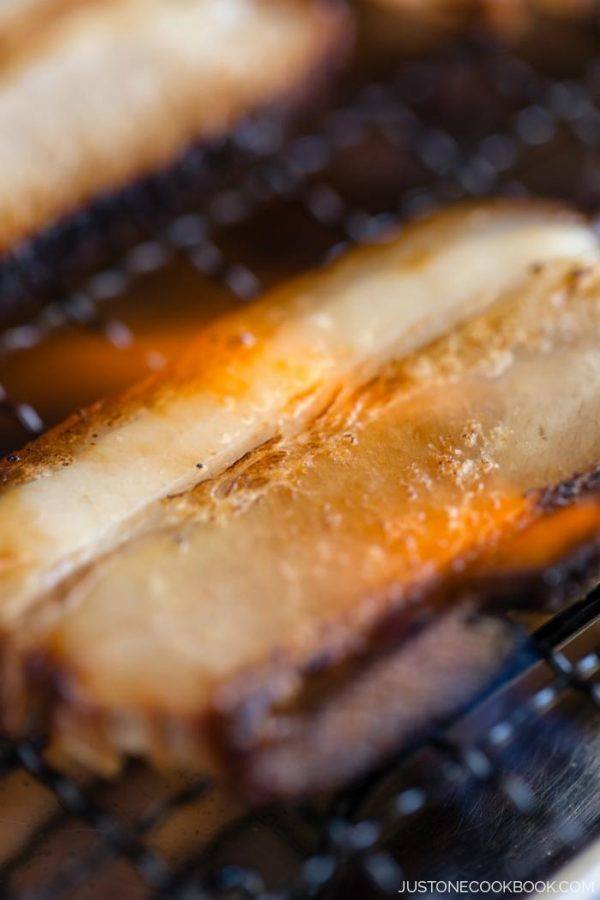
How to Reheat Chashu
There are 3 ways to reheat Chashu:
- Soak Chashu in the hot cooking sauce.
- Directly put in the hot noodle soup.
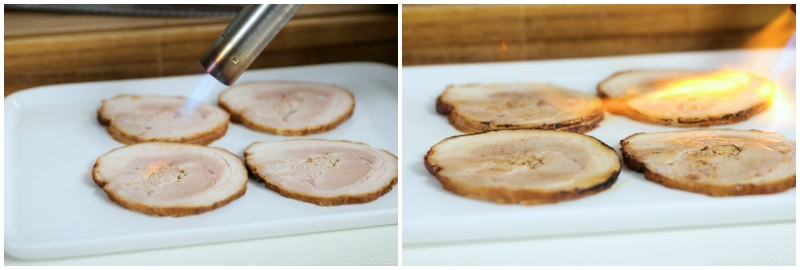
- Sear the Chashu using a culinary butane torch. We call this Aburi Chashu (炙りチャーシュー). Aburi means searing in Japanese and you may have heard about Aburi Toro and Aburi Salmon from the sushi menu.
I use searing options to reheat Chashu and to add smoky charred flavor. Don't forget to drizzle some hot cooking liquid on top!
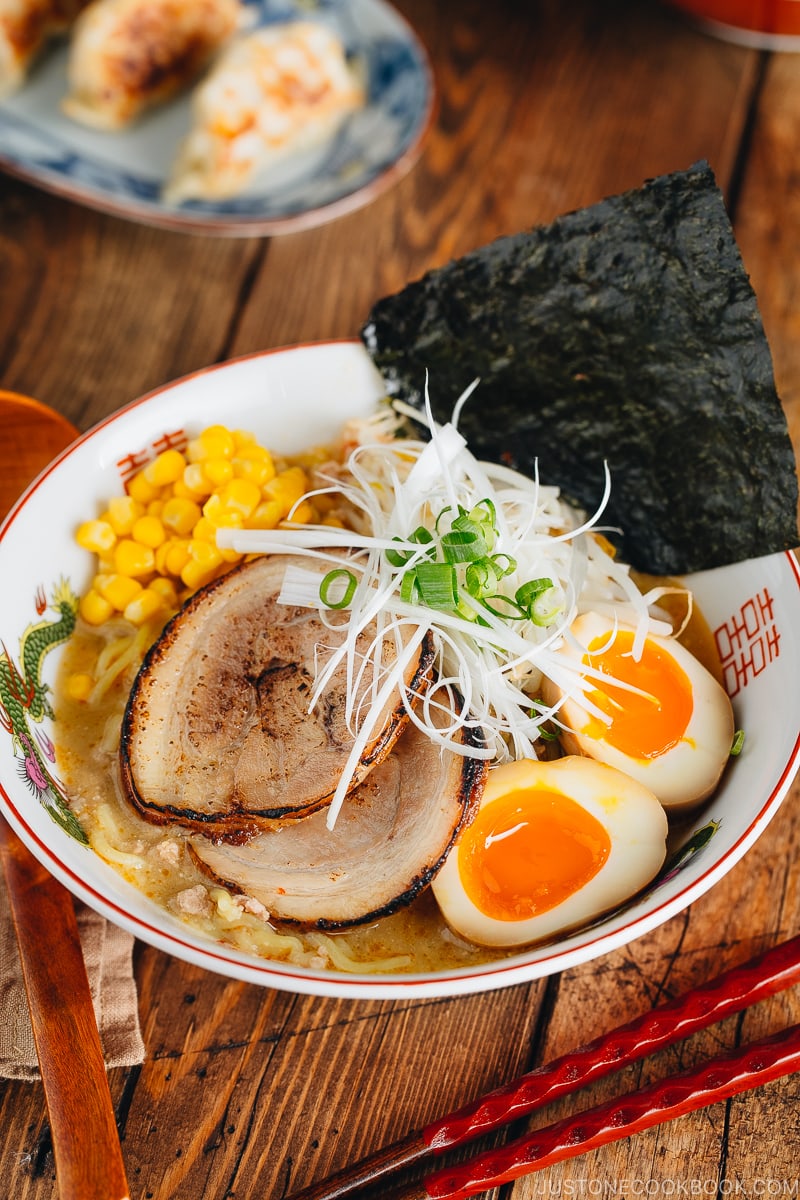
Miso Ramen
Various Ways to Enjoy Chashu
Besides enjoying Chashu with ramen or by itself, you can also use it for many other dishes. Here are my suggestions:
- Noodle dishes – Hiyashi Chuka and Tsukemen
- Rice dishes – Chashu Don (over rice) and Chashu Fried Rice – a great way to use up the broken pieces or edges of Chashu.
- Sandwiches – Serve with steamed buns (use this recipe)
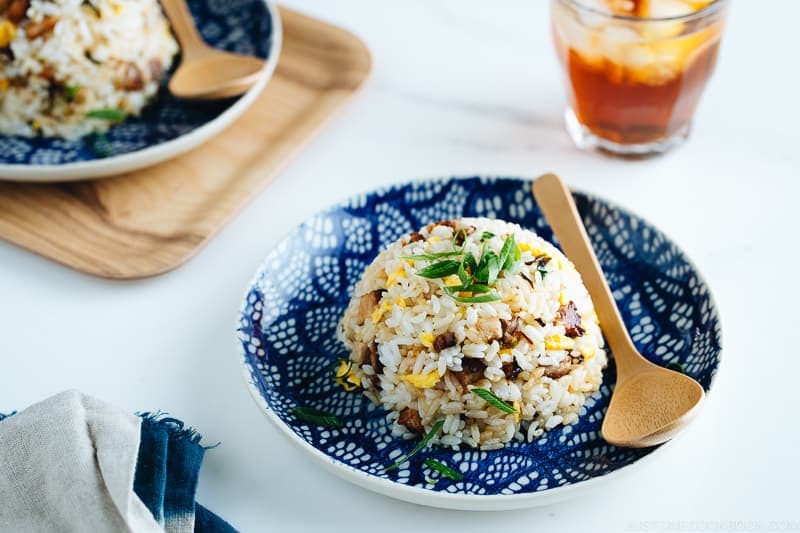
What to Do with Leftover Chashu Cooking Sauce
- Stir fry seasoning
- Marinate for grilling meat
- Make Ramen Egg
Family's Favorite Recipe for a Long Time!
I've been cooking this exact Chashu recipe for almost 20 years (and on the blog since 2011) and my family loves it. It's not that difficult to make at all, but you may need to be around in the kitchen while simmering the meat. The final reward is phenomenal and it's totally worth your time!
Wish to learn more about Japanese cooking?Sign up for our freenewsletter to receive cooking tips & recipe updates! And stay in touch with me on Facebook, Pinterest, YouTube, and Instagram.
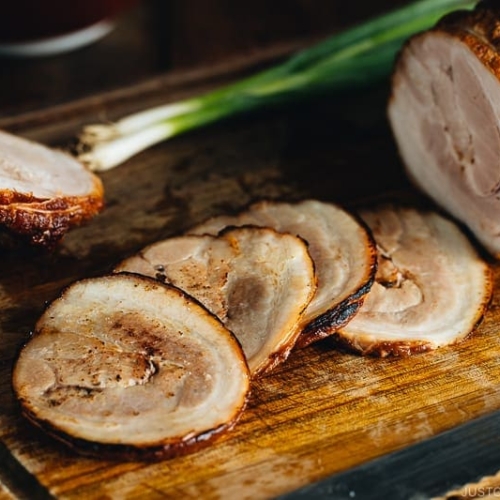
Chashu (Japanese Braised Pork Belly)
Make this easy, melt-in-your-mouth Chashu pork belly recipe at home! Braised in a sweet and savory sauce, these tender slices of meat can now top your next bowl of ramen!
Servings: 8 (to 10 as ramen topping)
Prevent your screen from going dark
For Rolled Chashu (Log) (Serves 8-10)
- 2-2½ lb pork belly block (roughly 8 inches x 9 inches, 20 cm x 23 cm; if your pork belly still has a rind and you want to remove it, this video for directions)
- 1 Tokyo negi (naga negi; long green onion) (substitute with 1 leek or 2-3 green onions, or a combination)
- 1 knob ginger
- 1 Tbsp neutral-flavored oil (vegetable, rice bran, canola, etc.)
- 1 cup sake
- 1 cup soy sauce
- 2 cups water
- ⅔ cup sugar
For Non-Rolled Chashu (Block) (Serves 3; this is the original recipe posted on May 2011)
- ¾ lb pork belly block (if your pork belly weighs 1 lb, see Notes)
- 1 Tokyo negi (naga negi; long green onion) (substitute with 1 leek or 2-3 green onions, or a combination)
- 1 knob ginger
- ½ Tbsp neutral-flavored oil (vegetable, rice bran, canola, etc.)
- ⅓ cup sake
- ⅓ cup soy sauce
- ⅔ cup water
- 3 Tbsp sugar
Japanese Ingredient Substitution: If you want substitutes for Japanese condiments and ingredients, click here.
FOR ROLLED CHASHU (Scroll down for the NON-ROLLED version)
DAY 1
-
Gather all the ingredients.
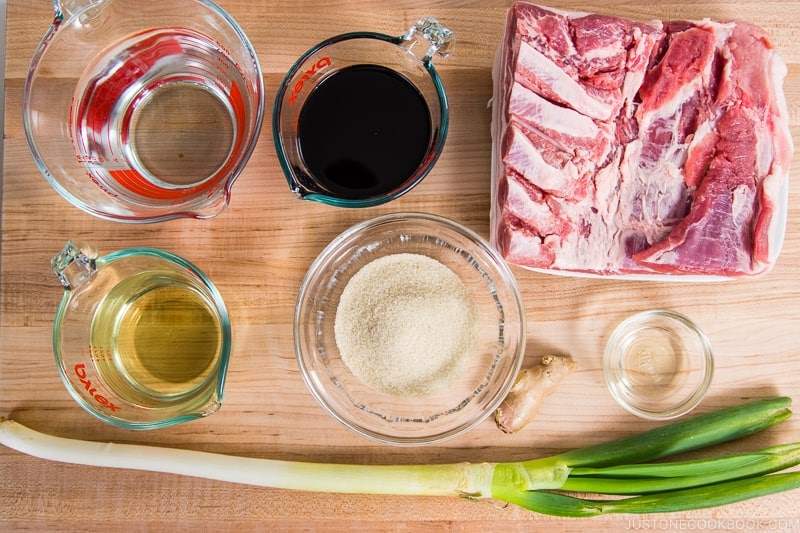
To Prepare the Pork Belly
-
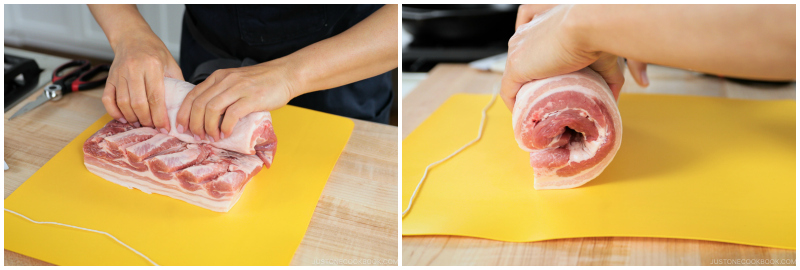
Roll up the pork belly, making sure one or both ends has a "bacon-like" appearance, showing the varying layers of meat and fat. If your slab comes with the rind, it should be removed. Ask your butcher to remove it for you.
-
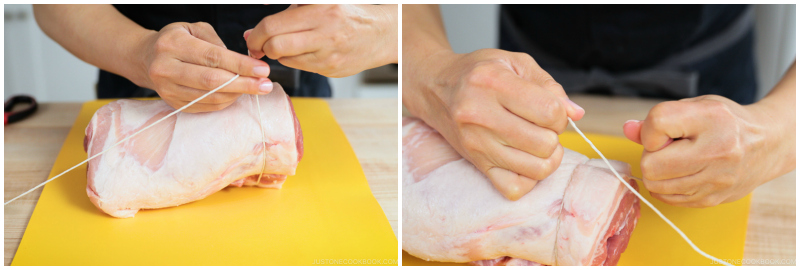
Run some butcher twine under the far end of the log. Tie a double knot to secure the pork tightly. Make sure you leave a tail of about 3 inches (7.5 cm) of twine at the end.
-
Next, tightly wrap the twine around the spot you just tied another 2 or 3 times to secure the starting point of the roll. Then, pull the twine to the opposite end of the pork belly roll. Tightly wrap the twine around that end 2 to 3 times to secure it.
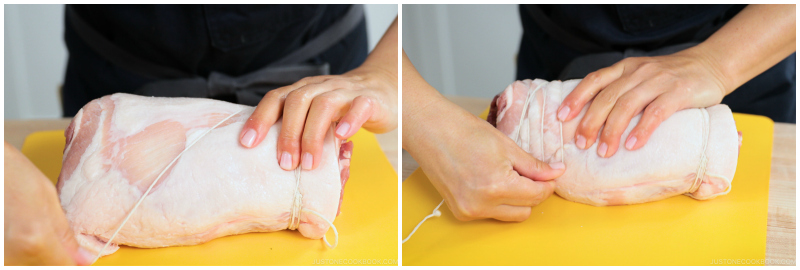
-
Next, start wrapping the twine around the roll back toward the starting point. Space each wrap ⅓ inch (1 cm) apart. Make sure you wrap the roll as tightly as possible.
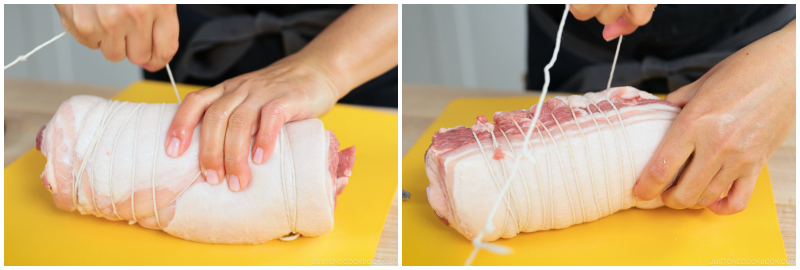
-
Once you reach the starting point, run the twine under some of the end wraps; this hooks the twine in place so you can reverse direction. Next, run the twine under 4 or 5 wraps going away from the starting point. Then, double back toward the starting point, running your twine under the wraps until you reach the original double knot.
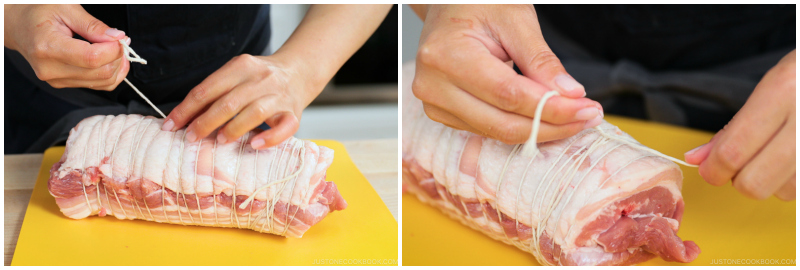
-
Find the 3-inch tail of twine that you left when you started. Tie a double knot with the tail and the long end of the twine, and cut the excess.
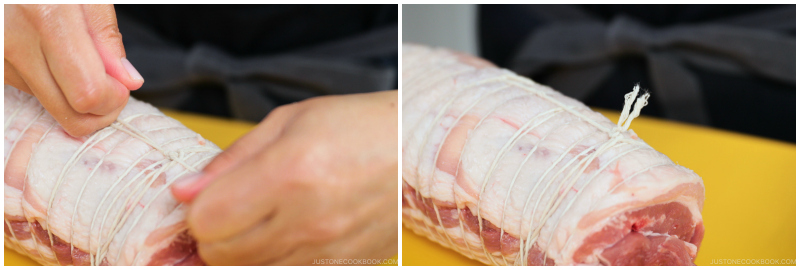
To Cut the Aromatics
-
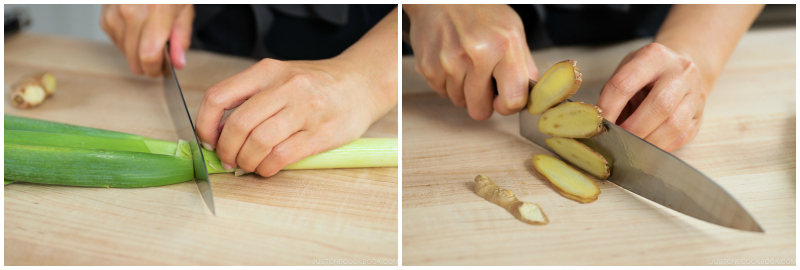
Cut off the green part of the long green onion and slice the ginger.
To Sear the Pork Belly
-
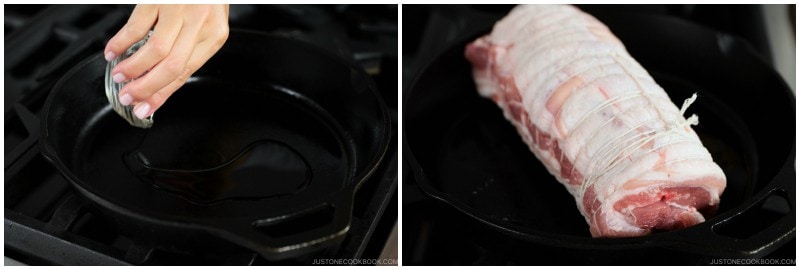
Heat the oil in a cast-iron skillet (or regular frying pan) over high heat. Add the tied pork belly to the skillet.
-
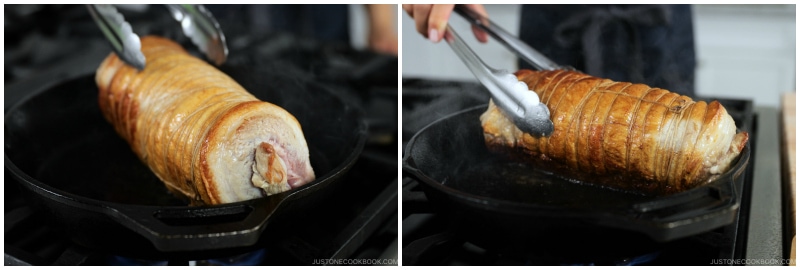
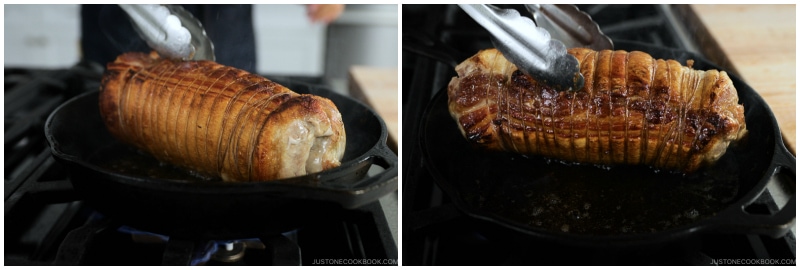
Sear the pork belly one side at a time, rotating it to make sure all sides are golden brown.
-
It'll take about 10-15 minutes all together.
To Prepare the Sauce
-
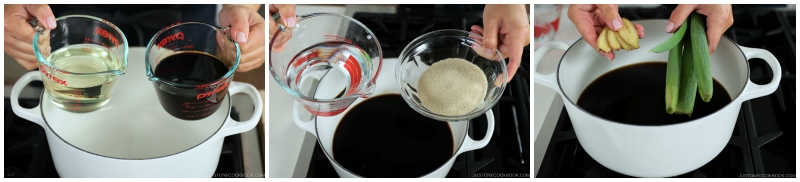
While the pork is searing, put all the ingredients for the seasonings in a heavy-bottomed pot (I used a Dutch oven) that will fit the chashu.
To Simmer the Chashu
-
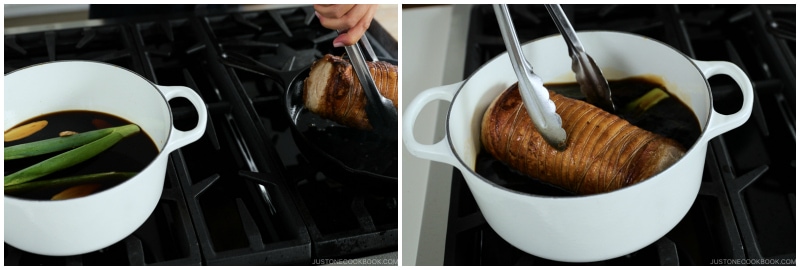
Transfer the seared chashu to the Dutch oven.
-
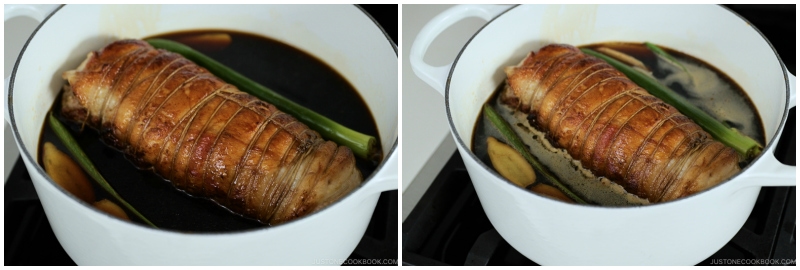
Bring the liquid to a boil over medium heat.
-
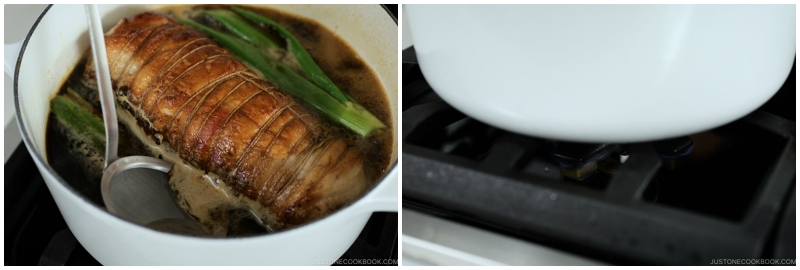
Once boiling, skim off the foam and scum. Then turn the heat to low/simmer.
-
Put an otoshibuta (drop lid) on top to press the ingredients down and limit the evaporation. You do not need to use a regular lid to control the evaporation. If you don't have an otoshibuta, you can make one with aluminum foil (here's how to make the otoshibuta).
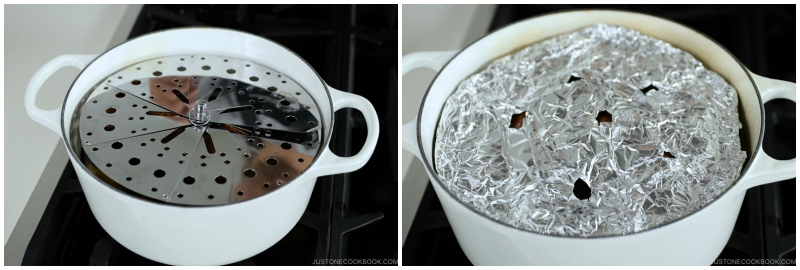
-
Simmer on low heat, and cover with the otoshibuta at all times for the next 2 hours, turning the chashu every 30 minutes.
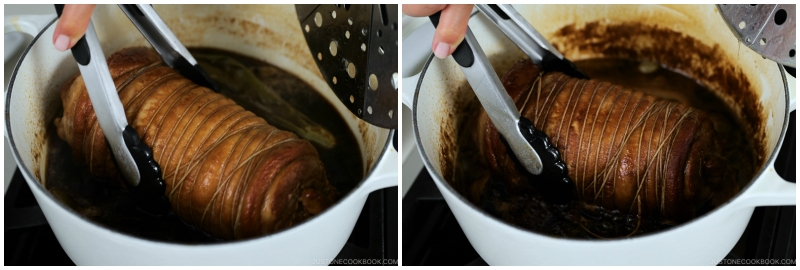
-
The sauce has been reduced. After 2 hours, turn off the heat to let it cool a little bit.
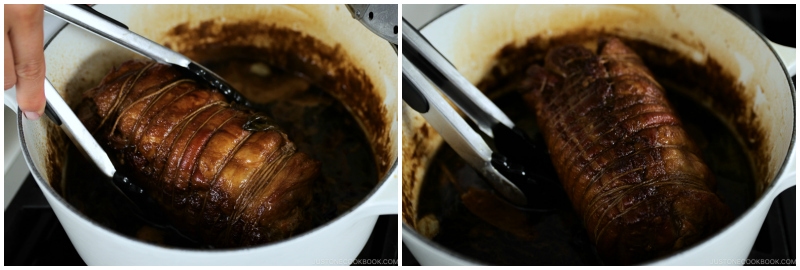
To Rest the Chashu Overnight
-
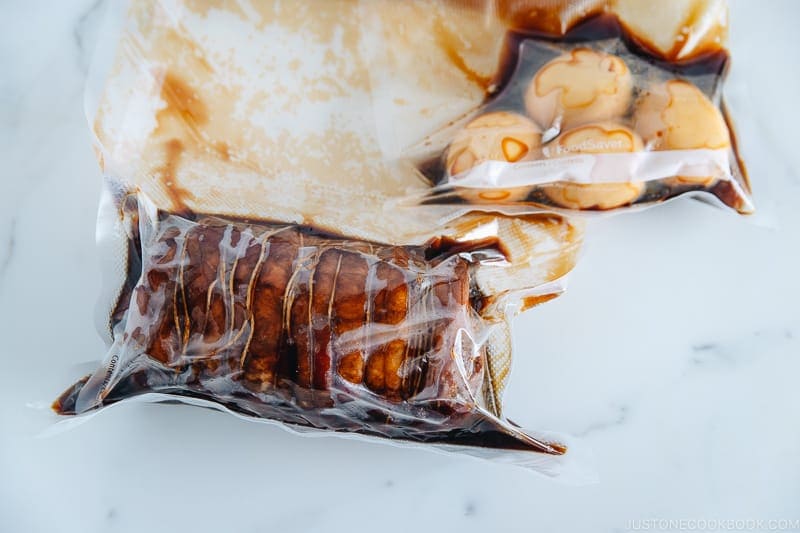
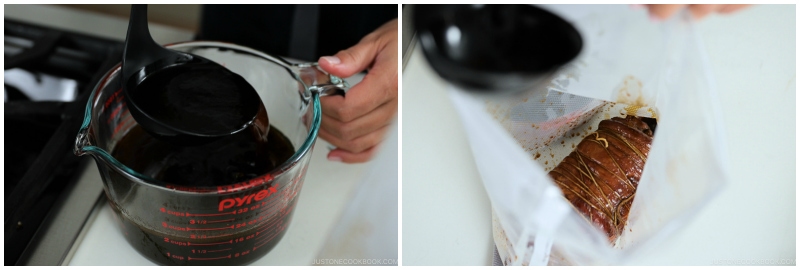
Once the meat is slightly cooled, transfer it to a container or a plastic food vacuum-sealing bag, such as one for the FoodSaver system. Strain the leftover cooking liquid through a fine-mesh strainer. You will have roughly 2½ cups of liquid.
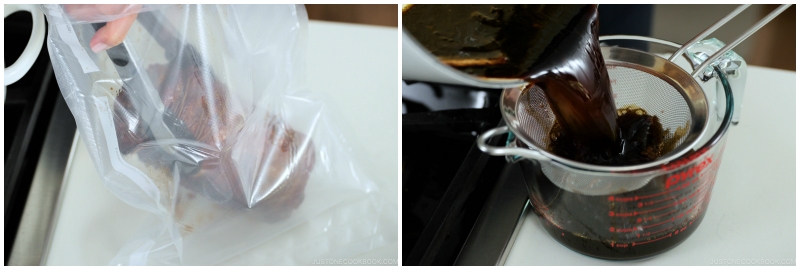
-
Add ½ cup of the cooking liquid into the bag. If using a container, add about 1 inch (2.5 cm) of the cooking liquid to the bottom and cover.
-
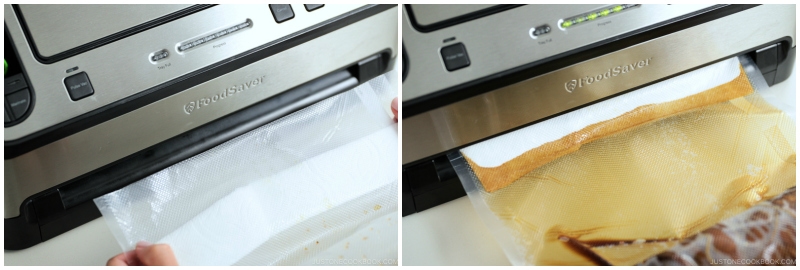
If using the FoodSaver bag, seal it with a FoodSaver sealer. Tip: Fold a piece of paper towel to plug the entry of the FoodSaver bag. This paper towel will absorb any extra moisture when you seal.
-
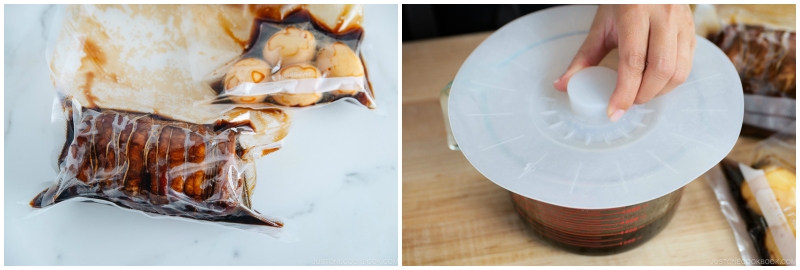
I also made quick Ramen Eggs (Ajitsuke Tamago) with the leftover liquid. Simply cook and peel soft-boiled eggs, add them to a bag with ½ cup of the cooking liquid, and close. Cover the cooking liquid, and store the chashu, ramen eggs, and the cooking liquid in the refrigerator.
DAY 2
-
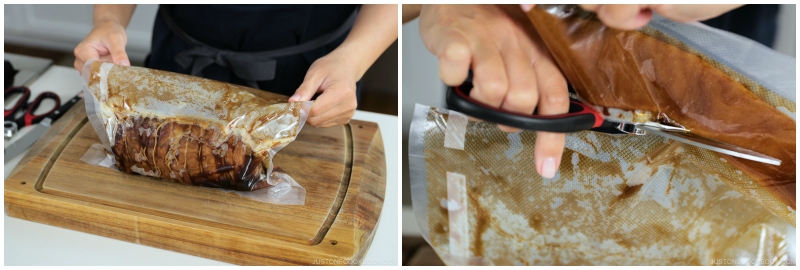
Open the bag of chashu.
-
Cut the twine with kitchen shears and remove the twine pieces completely.
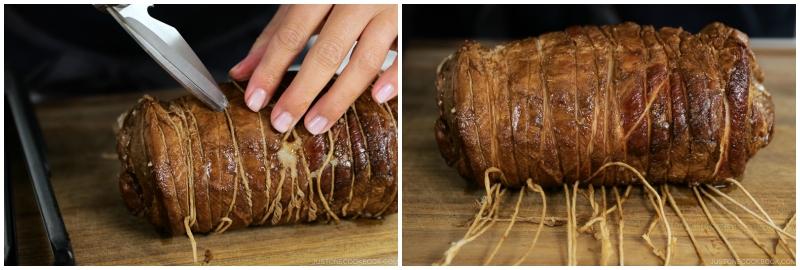
-
Slice the chashu into ¼-inch pieces and keep the end piece for Chashu Fried Rice!
-
Place the chashu slices on a ceramic plate and use a propane torch or broiler to sear the chashu slices to enhance the flavor. Enjoy them immediately or serve on your ramen.
-
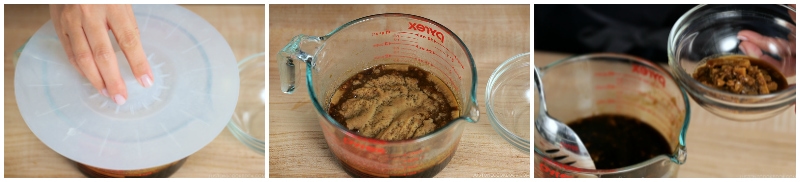
Scoop up and discard the solidified fat from the cooking sauce.
-
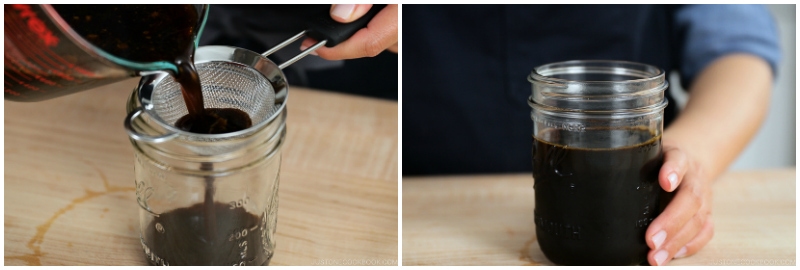
Strain the sauce over a fine-mesh sieve to make sure the solidified fat is left behind. Pour the sauce into a mason jar or container and seal. The sauce will last for a month in the refrigerator. I use it for drizzling over the chashu and for making stir-fried dishes, marinades, and ramen eggs.
To Store
-
You can store the chashu in the refrigerator for up to 7 days or 1 month in the freezer. I usually divide the rolled chashu into thirds and freeze 2 portions separately (for ramen right away, and Chashu Fried Rice and Chashu Bowl for later). Ramen Eggs should be consumed in 3-4 days if they are soft-boiled eggs and 7 days if hard-boiled eggs. The eggs get saltier the longer you keep them in the marinade, so remove them from the sauce when they have the right taste.
FOR the NON-ROLLED CHASHU
-
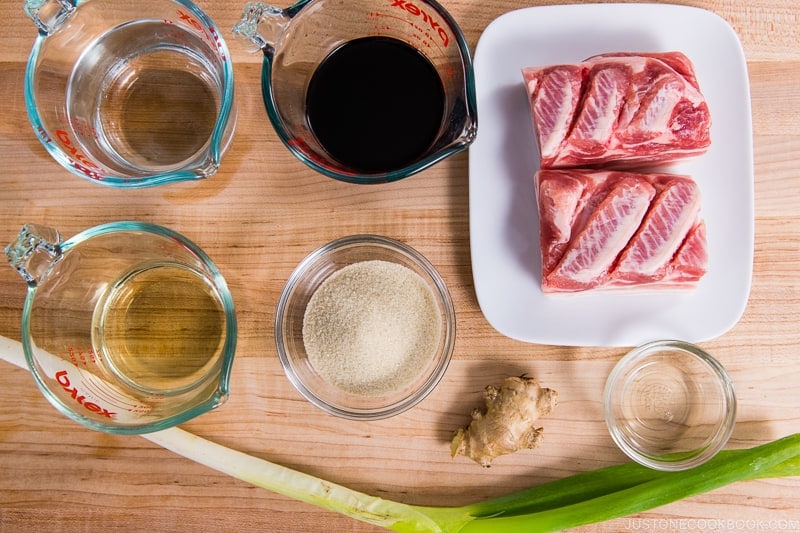
Gather all the ingredients. For small blocks of pork belly (about 1 lb), you don't need to roll them up before cooking, and the simmering time is just 1 hour (instead of 2 hours).
-
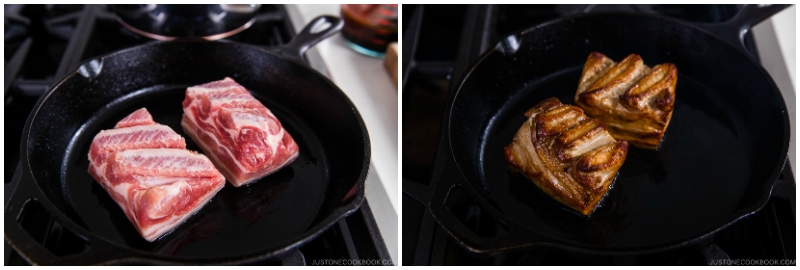
Heat the oil in a cast iron skillet (or regular frying pan) over high heat. Sear the pieces fat-side down first, then flip them over to sear the other sides, which will take about 10 minutes.
-
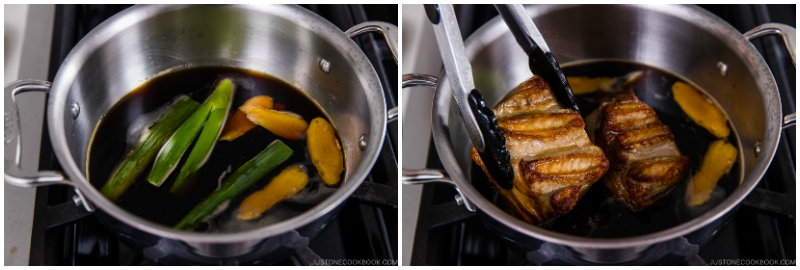
While searing, put all the ingredients for the seasonings in a heavy-bottomed pot (or regular pot) that will fit the chashu. Add the chashu and bring it to a boil, skimming the scum and foam. Then turn the heat to low/simmer.
-
Put an otoshibuta (drop lid) on top to press the ingredients down and limit the evaporation. If you don't have an otoshibuta, you can make one with aluminum foil (here's how to make otoshibuta). Simmer on low heat for one hour, turning the chashu every 15 minutes and keeping an otoshibuta on at all times.
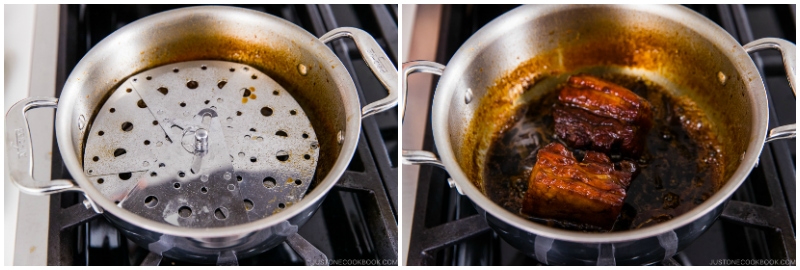
-
After one hour, there is ½ inch of liquid left in the pot. Now, you have 2 options. Option 1: If you're serving it right away, remove the otoshibuta and further reduce the sauce on low heat until the sauce thickens and you can see the bottom of the pot when you draw a line through the sauce with a spatula. Option 2 (recommended): Transfer the chashu to a container or bag with a little bit of cooking sauce and refrigerate overnight. Strain the leftover cooking sauce, transfer to a jar, and refrigerate.
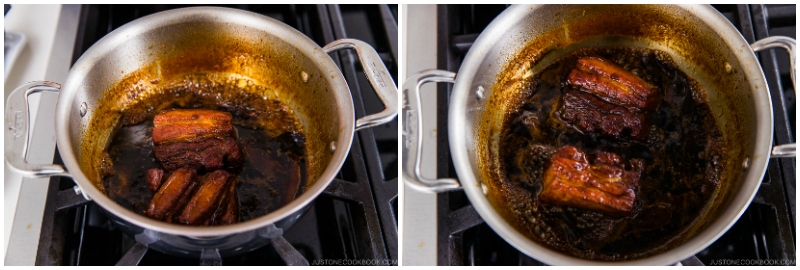
-
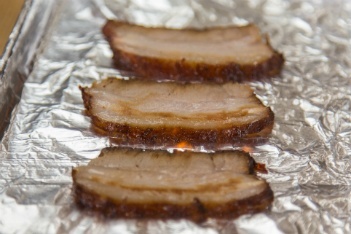
To serve, slice the chashu into ¼-inch (6 mm) pieces. You can use a propane torch or broiler to sear the chashu slices to enhance the flavor. If you stored the chashu overnight and don't want to sear the chashu, you can reheat it by soaking it in hot cooking sauce.
For 1 lb Pork Belly (Non-Rolled Chashu for 4 Servings):
- 1 lb pork belly block (454 g)
- 1 negi (long green onion) (substitute with 1 leek or 2-3 green onions)
- 1 knob ginger
- ½ Tbsp neutral-flavored oil (vegetable, canola, etc.)
- ½ cup sake (120 ml)
- ½ cup soy sauce (120 ml)
- 1 cup water (240 ml)
- ⅓ cup sugar (75 g, 5 Tbsp)
Calories: 670 kcal · Carbohydrates: 11 g · Protein: 12 g · Fat: 62 g · Saturated Fat: 23 g · Cholesterol: 82 mg · Sodium: 998 mg · Potassium: 233 mg · Fiber: 1 g · Sugar: 8 g · Vitamin A: 26 IU · Vitamin C: 1 mg · Calcium: 12 mg · Iron: 1 mg
Course: Main Course, Side Dish
Cuisine: Japanese
Keyword: chashu, pork belly, ramen
©JustOneCookbook.com Content and photographs are copyright protected. Sharing of this recipe is both encouraged and appreciated. Copying and/or pasting full recipes to any website or social media is strictly prohibited. Please view my photo use policy here.
If you made this recipe, snap a pic and hashtag it #justonecookbook! We love to see your creations on Instagram @justonecookbook!
Editor's Notes: This post was originally shared in May 2011. The first video was added in September 2022 with new images. New video and images are added in May 2019.
Source: https://www.justonecookbook.com/homemade-chashu/
0 Response to "Braised Beef Belly in Hot Pot"
Post a Comment